
Difference: ArthurPalmer (1 vs. 23)
Revision 2317 Feb 2010 - Main.DavidCowburn
| ||||||||
| Changed: | ||||||||
| < < |
| |||||||
| > > |
| |||||||
| Deleted: | ||||||||
| < < | Assistant: Ed Johnson 212-305-3882 etj1@columbia.edu | |||||||
Grants associated with NYSBCGM59273
GM50291Grant Number: 2R01GM050291-12 PI Name: PALMER, ARTHUR G. PI Email: agp6@columbia.edu PI Title: PROFESSOR Project Title: Nuclear Magnetic Resonance Studies of Proteins Abstract: DESCRIPTION (provided by applicant): Comprehensive experimental information on the essential contributions of intramolecular dynamics to biological functions of proteins is critical for biophysical theories of equilibrium properties, such as heat capacity and thermal stability; for mechanistic interpretations of kinetic processes, such as enzyme catalysis and ligand recognition; and for design of novel proteins and protein ligands, including pharmaceutical agents. This research project will use multidimensional NMR spectroscopy to address these fundamental issues. One long-term goal is to define the molecular determinants of stability and catalytic activity of the enzyme ribonuclease HI (RNase H) by comparing the structural, dynamical and enzymatic properties of homologous proteins derived from Escherichia coli and the extremely thermophilic bacterium Thermus thermophilus. The enzyme is distributed widely in prokaryotes and eukaryotes, and retroviral reverse transcriptase contains a C-terminal RNase H domain. Another long-term goal is to define the molecular determinants of ligand binding, including aspects of specificity, and allosterism, in DNA recognition by the yeast protein GCN4 and in nucleotide binding by the ATP-binding cassette (ABC) MJ1267 of the branched chain amino acid (LIV) transporter from Methanococcus jannaschii. GCN4 is the prototypical member of the bZip family of transcription activators. Motifs that recognize specific DNA sequences are ubiquitous components of proteins that regulate gene expression; consequently, explication of the molecular basis for recognition is critical for understanding normal biological function and pathology. GCN4 represents an example of induced fit molecular recognition through a disorder-order transition associated with DNA binding. The LIV transporter is a member of a diverse family of ABC transporters involved in numerous biological processes and diseases, including multidrug resistance and cystic fibrosis. ABC MJ1267 represents an example of selected-fit molecular recognition and allosteric transmission of conformational changes between remote sites in proteins. Thesaurus Terms: bacterial protein, enzyme activity, intermolecular interaction, molecular dynamics, protein structure function, ribonuclease H, structural biology, thermostability adenosine diphosphate, adenosine triphosphate, biophysics, chemical kinetics, enzyme substrate complex, membrane transport protein, molecular site, nucleic acid, protein folding, species difference, temperature, transcription factor Archaea, Escherichia coli, nuclear magnetic resonance spectroscopy, site directed mutagenesis Institution: COLUMBIA UNIVERSITY HEALTH SCIENCES PO Box 49 NEW YORK, NY 10032 Fiscal Year: 2005 Department: BIOCHEM & MOLECULAR BIOPHYSICS Project Start: 01-AUG-1994 Project End: 31-JUL-2009 ICD: NATIONAL INSTITUTE OF GENERAL MEDICAL SCIENCES IRG: MSFC
Personal Preferences (details in TWikiVariables)
| ||||||||

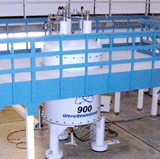

Revision 2202 Apr 2009 - Main.SherryllJones
Grants associated with NYSBCGM59273 | ||||||||
| Changed: | ||||||||
| < < |
| |||||||
| > > |
| |||||||
| Added: | ||||||||
| > > | Thesaurus Terms: protein acid, actin binding protein, active site, catalyst, chemical, conditioning, conformation, decarboxylase, dimer, enzyme, enzyme complex, gene mutation, genetics, glutamate receptor, insight, intermolecular interaction, ionization, isomerase, lead, ligand, magnetism, measurement, metabolism, method development, model, motivation, mutant, neoplasm /cancer, nerve, ornithine decarboxylase, pathology, phosphate, posttranslational modification, protein folding, protein protein interaction, pulmonary respiration, receptor expression, relaxation, role, solid state, solution, technology /technique development, trypsin inhibitor, ubiquitin Institution: COLUMBIA UNIVERSITY HEALTH SCIENCES Columbia University Medical Center NEW YORK, NY 100323702 Fiscal Year: 2009 Department: BIOCHEM & MOLECULAR BIOPHYSICS Project Start: 01-MAY-1999 Project End: 30-APR-2010 ICD: NATIONAL INSTITUTE OF GENERAL MEDICAL SCIENCES IRG: ZRG1 | |||||||
GM50291Grant Number: 2R01GM050291-12 PI Name: PALMER, ARTHUR G. PI Email: agp6@columbia.edu PI Title: PROFESSOR Project Title: Nuclear Magnetic Resonance Studies of Proteins Abstract: DESCRIPTION (provided by applicant): Comprehensive experimental information on the essential contributions of intramolecular dynamics to biological functions of proteins is critical for biophysical theories of equilibrium properties, such as heat capacity and thermal stability; for mechanistic interpretations of kinetic processes, such as enzyme catalysis and ligand recognition; and for design of novel proteins and protein ligands, including pharmaceutical agents. This research project will use multidimensional NMR spectroscopy to address these fundamental issues. One long-term goal is to define the molecular determinants of stability and catalytic activity of the enzyme ribonuclease HI (RNase H) by comparing the structural, dynamical and enzymatic properties of homologous proteins derived from Escherichia coli and the extremely thermophilic bacterium Thermus thermophilus. The enzyme is distributed widely in prokaryotes and eukaryotes, and retroviral reverse transcriptase contains a C-terminal RNase H domain. Another long-term goal is to define the molecular determinants of ligand binding, including aspects of specificity, and allosterism, in DNA recognition by the yeast protein GCN4 and in nucleotide binding by the ATP-binding cassette (ABC) MJ1267 of the branched chain amino acid (LIV) transporter from Methanococcus jannaschii. GCN4 is the prototypical member of the bZip family of transcription activators. Motifs that recognize specific DNA sequences are ubiquitous components of proteins that regulate gene expression; consequently, explication of the molecular basis for recognition is critical for understanding normal biological function and pathology. GCN4 represents an example of induced fit molecular recognition through a disorder-order transition associated with DNA binding. The LIV transporter is a member of a diverse family of ABC transporters involved in numerous biological processes and diseases, including multidrug resistance and cystic fibrosis. ABC MJ1267 represents an example of selected-fit molecular recognition and allosteric transmission of conformational changes between remote sites in proteins. Thesaurus Terms: bacterial protein, enzyme activity, intermolecular interaction, molecular dynamics, protein structure function, ribonuclease H, structural biology, thermostability adenosine diphosphate, adenosine triphosphate, biophysics, chemical kinetics, enzyme substrate complex, membrane transport protein, molecular site, nucleic acid, protein folding, species difference, temperature, transcription factor Archaea, Escherichia coli, nuclear magnetic resonance spectroscopy, site directed mutagenesis Institution: COLUMBIA UNIVERSITY HEALTH SCIENCES PO Box 49 NEW YORK, NY 10032 Fiscal Year: 2005 Department: BIOCHEM & MOLECULAR BIOPHYSICS Project Start: 01-AUG-1994 Project End: 31-JUL-2009 ICD: NATIONAL INSTITUTE OF GENERAL MEDICAL SCIENCES IRG: MSFC
Personal Preferences (details in TWikiVariables)
| ||||||||
Revision 2123 Jan 2009 - Main.DavidHirsh
| ||||||||
| Added: | ||||||||
| > > |
| |||||||
| ||||||||
| Changed: | ||||||||
| < < |
| |||||||
| > > |
| |||||||
| Added: | ||||||||
| > > | Assistant: Ed Johnson 212-305-3882 etj1@columbia.edu | |||||||
Grants associated with NYSBCGM59273
GM50291Grant Number: 2R01GM050291-12 PI Name: PALMER, ARTHUR G. PI Email: agp6@columbia.edu PI Title: PROFESSOR Project Title: Nuclear Magnetic Resonance Studies of Proteins Abstract: DESCRIPTION (provided by applicant): Comprehensive experimental information on the essential contributions of intramolecular dynamics to biological functions of proteins is critical for biophysical theories of equilibrium properties, such as heat capacity and thermal stability; for mechanistic interpretations of kinetic processes, such as enzyme catalysis and ligand recognition; and for design of novel proteins and protein ligands, including pharmaceutical agents. This research project will use multidimensional NMR spectroscopy to address these fundamental issues. One long-term goal is to define the molecular determinants of stability and catalytic activity of the enzyme ribonuclease HI (RNase H) by comparing the structural, dynamical and enzymatic properties of homologous proteins derived from Escherichia coli and the extremely thermophilic bacterium Thermus thermophilus. The enzyme is distributed widely in prokaryotes and eukaryotes, and retroviral reverse transcriptase contains a C-terminal RNase H domain. Another long-term goal is to define the molecular determinants of ligand binding, including aspects of specificity, and allosterism, in DNA recognition by the yeast protein GCN4 and in nucleotide binding by the ATP-binding cassette (ABC) MJ1267 of the branched chain amino acid (LIV) transporter from Methanococcus jannaschii. GCN4 is the prototypical member of the bZip family of transcription activators. Motifs that recognize specific DNA sequences are ubiquitous components of proteins that regulate gene expression; consequently, explication of the molecular basis for recognition is critical for understanding normal biological function and pathology. GCN4 represents an example of induced fit molecular recognition through a disorder-order transition associated with DNA binding. The LIV transporter is a member of a diverse family of ABC transporters involved in numerous biological processes and diseases, including multidrug resistance and cystic fibrosis. ABC MJ1267 represents an example of selected-fit molecular recognition and allosteric transmission of conformational changes between remote sites in proteins. Thesaurus Terms: bacterial protein, enzyme activity, intermolecular interaction, molecular dynamics, protein structure function, ribonuclease H, structural biology, thermostability adenosine diphosphate, adenosine triphosphate, biophysics, chemical kinetics, enzyme substrate complex, membrane transport protein, molecular site, nucleic acid, protein folding, species difference, temperature, transcription factor Archaea, Escherichia coli, nuclear magnetic resonance spectroscopy, site directed mutagenesis Institution: COLUMBIA UNIVERSITY HEALTH SCIENCES PO Box 49 NEW YORK, NY 10032 Fiscal Year: 2005 Department: BIOCHEM & MOLECULAR BIOPHYSICS Project Start: 01-AUG-1994 Project End: 31-JUL-2009 ICD: NATIONAL INSTITUTE OF GENERAL MEDICAL SCIENCES IRG: MSFC
Personal Preferences (details in TWikiVariables)
| ||||||||
Revision 2023 Dec 2008 - Main.DavidCowburn
| ||||||||
| Changed: | ||||||||
| < < |
| |||||||
| > > |
| |||||||
Grants associated with NYSBCGM59273
GM50291Grant Number: 2R01GM050291-12 PI Name: PALMER, ARTHUR G. PI Email: agp6@columbia.edu PI Title: PROFESSOR Project Title: Nuclear Magnetic Resonance Studies of Proteins Abstract: DESCRIPTION (provided by applicant): Comprehensive experimental information on the essential contributions of intramolecular dynamics to biological functions of proteins is critical for biophysical theories of equilibrium properties, such as heat capacity and thermal stability; for mechanistic interpretations of kinetic processes, such as enzyme catalysis and ligand recognition; and for design of novel proteins and protein ligands, including pharmaceutical agents. This research project will use multidimensional NMR spectroscopy to address these fundamental issues. One long-term goal is to define the molecular determinants of stability and catalytic activity of the enzyme ribonuclease HI (RNase H) by comparing the structural, dynamical and enzymatic properties of homologous proteins derived from Escherichia coli and the extremely thermophilic bacterium Thermus thermophilus. The enzyme is distributed widely in prokaryotes and eukaryotes, and retroviral reverse transcriptase contains a C-terminal RNase H domain. Another long-term goal is to define the molecular determinants of ligand binding, including aspects of specificity, and allosterism, in DNA recognition by the yeast protein GCN4 and in nucleotide binding by the ATP-binding cassette (ABC) MJ1267 of the branched chain amino acid (LIV) transporter from Methanococcus jannaschii. GCN4 is the prototypical member of the bZip family of transcription activators. Motifs that recognize specific DNA sequences are ubiquitous components of proteins that regulate gene expression; consequently, explication of the molecular basis for recognition is critical for understanding normal biological function and pathology. GCN4 represents an example of induced fit molecular recognition through a disorder-order transition associated with DNA binding. The LIV transporter is a member of a diverse family of ABC transporters involved in numerous biological processes and diseases, including multidrug resistance and cystic fibrosis. ABC MJ1267 represents an example of selected-fit molecular recognition and allosteric transmission of conformational changes between remote sites in proteins. Thesaurus Terms: bacterial protein, enzyme activity, intermolecular interaction, molecular dynamics, protein structure function, ribonuclease H, structural biology, thermostability adenosine diphosphate, adenosine triphosphate, biophysics, chemical kinetics, enzyme substrate complex, membrane transport protein, molecular site, nucleic acid, protein folding, species difference, temperature, transcription factor Archaea, Escherichia coli, nuclear magnetic resonance spectroscopy, site directed mutagenesis Institution: COLUMBIA UNIVERSITY HEALTH SCIENCES PO Box 49 NEW YORK, NY 10032 Fiscal Year: 2005 Department: BIOCHEM & MOLECULAR BIOPHYSICS Project Start: 01-AUG-1994 Project End: 31-JUL-2009 ICD: NATIONAL INSTITUTE OF GENERAL MEDICAL SCIENCES IRG: MSFC
Personal Preferences (details in TWikiVariables)
| ||||||||
Revision 1917 Nov 2008 - Main.DavidCowburn
| ||||||||
| Changed: | ||||||||
| < < |
| |||||||
| > > |
| |||||||
Grants associated with NYSBCGM59273
GM50291Grant Number: 2R01GM050291-12 PI Name: PALMER, ARTHUR G. PI Email: agp6@columbia.edu PI Title: PROFESSOR Project Title: Nuclear Magnetic Resonance Studies of Proteins Abstract: DESCRIPTION (provided by applicant): Comprehensive experimental information on the essential contributions of intramolecular dynamics to biological functions of proteins is critical for biophysical theories of equilibrium properties, such as heat capacity and thermal stability; for mechanistic interpretations of kinetic processes, such as enzyme catalysis and ligand recognition; and for design of novel proteins and protein ligands, including pharmaceutical agents. This research project will use multidimensional NMR spectroscopy to address these fundamental issues. One long-term goal is to define the molecular determinants of stability and catalytic activity of the enzyme ribonuclease HI (RNase H) by comparing the structural, dynamical and enzymatic properties of homologous proteins derived from Escherichia coli and the extremely thermophilic bacterium Thermus thermophilus. The enzyme is distributed widely in prokaryotes and eukaryotes, and retroviral reverse transcriptase contains a C-terminal RNase H domain. Another long-term goal is to define the molecular determinants of ligand binding, including aspects of specificity, and allosterism, in DNA recognition by the yeast protein GCN4 and in nucleotide binding by the ATP-binding cassette (ABC) MJ1267 of the branched chain amino acid (LIV) transporter from Methanococcus jannaschii. GCN4 is the prototypical member of the bZip family of transcription activators. Motifs that recognize specific DNA sequences are ubiquitous components of proteins that regulate gene expression; consequently, explication of the molecular basis for recognition is critical for understanding normal biological function and pathology. GCN4 represents an example of induced fit molecular recognition through a disorder-order transition associated with DNA binding. The LIV transporter is a member of a diverse family of ABC transporters involved in numerous biological processes and diseases, including multidrug resistance and cystic fibrosis. ABC MJ1267 represents an example of selected-fit molecular recognition and allosteric transmission of conformational changes between remote sites in proteins. Thesaurus Terms: bacterial protein, enzyme activity, intermolecular interaction, molecular dynamics, protein structure function, ribonuclease H, structural biology, thermostability adenosine diphosphate, adenosine triphosphate, biophysics, chemical kinetics, enzyme substrate complex, membrane transport protein, molecular site, nucleic acid, protein folding, species difference, temperature, transcription factor Archaea, Escherichia coli, nuclear magnetic resonance spectroscopy, site directed mutagenesis Institution: COLUMBIA UNIVERSITY HEALTH SCIENCES PO Box 49 NEW YORK, NY 10032 Fiscal Year: 2005 Department: BIOCHEM & MOLECULAR BIOPHYSICS Project Start: 01-AUG-1994 Project End: 31-JUL-2009 ICD: NATIONAL INSTITUTE OF GENERAL MEDICAL SCIENCES IRG: MSFC
Personal Preferences (details in TWikiVariables)
| ||||||||
Revision 1814 Nov 2008 - Main.DavidCowburn
| ||||||||
| Changed: | ||||||||
| < < |
| |||||||
| > > |
| |||||||
Grants associated with NYSBCGM59273
GM50291Grant Number: 2R01GM050291-12 PI Name: PALMER, ARTHUR G. PI Email: agp6@columbia.edu PI Title: PROFESSOR Project Title: Nuclear Magnetic Resonance Studies of Proteins Abstract: DESCRIPTION (provided by applicant): Comprehensive experimental information on the essential contributions of intramolecular dynamics to biological functions of proteins is critical for biophysical theories of equilibrium properties, such as heat capacity and thermal stability; for mechanistic interpretations of kinetic processes, such as enzyme catalysis and ligand recognition; and for design of novel proteins and protein ligands, including pharmaceutical agents. This research project will use multidimensional NMR spectroscopy to address these fundamental issues. One long-term goal is to define the molecular determinants of stability and catalytic activity of the enzyme ribonuclease HI (RNase H) by comparing the structural, dynamical and enzymatic properties of homologous proteins derived from Escherichia coli and the extremely thermophilic bacterium Thermus thermophilus. The enzyme is distributed widely in prokaryotes and eukaryotes, and retroviral reverse transcriptase contains a C-terminal RNase H domain. Another long-term goal is to define the molecular determinants of ligand binding, including aspects of specificity, and allosterism, in DNA recognition by the yeast protein GCN4 and in nucleotide binding by the ATP-binding cassette (ABC) MJ1267 of the branched chain amino acid (LIV) transporter from Methanococcus jannaschii. GCN4 is the prototypical member of the bZip family of transcription activators. Motifs that recognize specific DNA sequences are ubiquitous components of proteins that regulate gene expression; consequently, explication of the molecular basis for recognition is critical for understanding normal biological function and pathology. GCN4 represents an example of induced fit molecular recognition through a disorder-order transition associated with DNA binding. The LIV transporter is a member of a diverse family of ABC transporters involved in numerous biological processes and diseases, including multidrug resistance and cystic fibrosis. ABC MJ1267 represents an example of selected-fit molecular recognition and allosteric transmission of conformational changes between remote sites in proteins. Thesaurus Terms: bacterial protein, enzyme activity, intermolecular interaction, molecular dynamics, protein structure function, ribonuclease H, structural biology, thermostability adenosine diphosphate, adenosine triphosphate, biophysics, chemical kinetics, enzyme substrate complex, membrane transport protein, molecular site, nucleic acid, protein folding, species difference, temperature, transcription factor Archaea, Escherichia coli, nuclear magnetic resonance spectroscopy, site directed mutagenesis Institution: COLUMBIA UNIVERSITY HEALTH SCIENCES PO Box 49 NEW YORK, NY 10032 Fiscal Year: 2005 Department: BIOCHEM & MOLECULAR BIOPHYSICS Project Start: 01-AUG-1994 Project End: 31-JUL-2009 ICD: NATIONAL INSTITUTE OF GENERAL MEDICAL SCIENCES IRG: MSFC
Personal Preferences (details in TWikiVariables)
| ||||||||
Revision 1714 Nov 2008 - Main.DavidCowburn
| ||||||||
| Changed: | ||||||||
| < < |
| |||||||
| > > |
| |||||||
Grants associated with NYSBCGM59273
GM50291Grant Number: 2R01GM050291-12 PI Name: PALMER, ARTHUR G. PI Email: agp6@columbia.edu PI Title: PROFESSOR Project Title: Nuclear Magnetic Resonance Studies of Proteins Abstract: DESCRIPTION (provided by applicant): Comprehensive experimental information on the essential contributions of intramolecular dynamics to biological functions of proteins is critical for biophysical theories of equilibrium properties, such as heat capacity and thermal stability; for mechanistic interpretations of kinetic processes, such as enzyme catalysis and ligand recognition; and for design of novel proteins and protein ligands, including pharmaceutical agents. This research project will use multidimensional NMR spectroscopy to address these fundamental issues. One long-term goal is to define the molecular determinants of stability and catalytic activity of the enzyme ribonuclease HI (RNase H) by comparing the structural, dynamical and enzymatic properties of homologous proteins derived from Escherichia coli and the extremely thermophilic bacterium Thermus thermophilus. The enzyme is distributed widely in prokaryotes and eukaryotes, and retroviral reverse transcriptase contains a C-terminal RNase H domain. Another long-term goal is to define the molecular determinants of ligand binding, including aspects of specificity, and allosterism, in DNA recognition by the yeast protein GCN4 and in nucleotide binding by the ATP-binding cassette (ABC) MJ1267 of the branched chain amino acid (LIV) transporter from Methanococcus jannaschii. GCN4 is the prototypical member of the bZip family of transcription activators. Motifs that recognize specific DNA sequences are ubiquitous components of proteins that regulate gene expression; consequently, explication of the molecular basis for recognition is critical for understanding normal biological function and pathology. GCN4 represents an example of induced fit molecular recognition through a disorder-order transition associated with DNA binding. The LIV transporter is a member of a diverse family of ABC transporters involved in numerous biological processes and diseases, including multidrug resistance and cystic fibrosis. ABC MJ1267 represents an example of selected-fit molecular recognition and allosteric transmission of conformational changes between remote sites in proteins. Thesaurus Terms: bacterial protein, enzyme activity, intermolecular interaction, molecular dynamics, protein structure function, ribonuclease H, structural biology, thermostability adenosine diphosphate, adenosine triphosphate, biophysics, chemical kinetics, enzyme substrate complex, membrane transport protein, molecular site, nucleic acid, protein folding, species difference, temperature, transcription factor Archaea, Escherichia coli, nuclear magnetic resonance spectroscopy, site directed mutagenesis Institution: COLUMBIA UNIVERSITY HEALTH SCIENCES PO Box 49 NEW YORK, NY 10032 Fiscal Year: 2005 Department: BIOCHEM & MOLECULAR BIOPHYSICS Project Start: 01-AUG-1994 Project End: 31-JUL-2009 ICD: NATIONAL INSTITUTE OF GENERAL MEDICAL SCIENCES IRG: MSFC
Personal Preferences (details in TWikiVariables)
| ||||||||
Revision 1614 Nov 2008 - Main.DavidCowburn
| ||||||||
| Changed: | ||||||||
| < < |
| |||||||
| > > |
| |||||||
Grants associated with NYSBCGM59273
GM50291Grant Number: 2R01GM050291-12 PI Name: PALMER, ARTHUR G. PI Email: agp6@columbia.edu PI Title: PROFESSOR Project Title: Nuclear Magnetic Resonance Studies of Proteins Abstract: DESCRIPTION (provided by applicant): Comprehensive experimental information on the essential contributions of intramolecular dynamics to biological functions of proteins is critical for biophysical theories of equilibrium properties, such as heat capacity and thermal stability; for mechanistic interpretations of kinetic processes, such as enzyme catalysis and ligand recognition; and for design of novel proteins and protein ligands, including pharmaceutical agents. This research project will use multidimensional NMR spectroscopy to address these fundamental issues. One long-term goal is to define the molecular determinants of stability and catalytic activity of the enzyme ribonuclease HI (RNase H) by comparing the structural, dynamical and enzymatic properties of homologous proteins derived from Escherichia coli and the extremely thermophilic bacterium Thermus thermophilus. The enzyme is distributed widely in prokaryotes and eukaryotes, and retroviral reverse transcriptase contains a C-terminal RNase H domain. Another long-term goal is to define the molecular determinants of ligand binding, including aspects of specificity, and allosterism, in DNA recognition by the yeast protein GCN4 and in nucleotide binding by the ATP-binding cassette (ABC) MJ1267 of the branched chain amino acid (LIV) transporter from Methanococcus jannaschii. GCN4 is the prototypical member of the bZip family of transcription activators. Motifs that recognize specific DNA sequences are ubiquitous components of proteins that regulate gene expression; consequently, explication of the molecular basis for recognition is critical for understanding normal biological function and pathology. GCN4 represents an example of induced fit molecular recognition through a disorder-order transition associated with DNA binding. The LIV transporter is a member of a diverse family of ABC transporters involved in numerous biological processes and diseases, including multidrug resistance and cystic fibrosis. ABC MJ1267 represents an example of selected-fit molecular recognition and allosteric transmission of conformational changes between remote sites in proteins. Thesaurus Terms: bacterial protein, enzyme activity, intermolecular interaction, molecular dynamics, protein structure function, ribonuclease H, structural biology, thermostability adenosine diphosphate, adenosine triphosphate, biophysics, chemical kinetics, enzyme substrate complex, membrane transport protein, molecular site, nucleic acid, protein folding, species difference, temperature, transcription factor Archaea, Escherichia coli, nuclear magnetic resonance spectroscopy, site directed mutagenesis Institution: COLUMBIA UNIVERSITY HEALTH SCIENCES PO Box 49 NEW YORK, NY 10032 Fiscal Year: 2005 Department: BIOCHEM & MOLECULAR BIOPHYSICS Project Start: 01-AUG-1994 Project End: 31-JUL-2009 ICD: NATIONAL INSTITUTE OF GENERAL MEDICAL SCIENCES IRG: MSFC
Personal Preferences (details in TWikiVariables)
| ||||||||
Revision 1510 Jul 2008 - Main.DavidCowburn
| ||||||||
| Changed: | ||||||||
| < < |
| |||||||
| > > |
| |||||||
Grants associated with NYSBCGM59273
GM50291Grant Number: 2R01GM050291-12 PI Name: PALMER, ARTHUR G. PI Email: agp6@columbia.edu PI Title: PROFESSOR Project Title: Nuclear Magnetic Resonance Studies of Proteins Abstract: DESCRIPTION (provided by applicant): Comprehensive experimental information on the essential contributions of intramolecular dynamics to biological functions of proteins is critical for biophysical theories of equilibrium properties, such as heat capacity and thermal stability; for mechanistic interpretations of kinetic processes, such as enzyme catalysis and ligand recognition; and for design of novel proteins and protein ligands, including pharmaceutical agents. This research project will use multidimensional NMR spectroscopy to address these fundamental issues. One long-term goal is to define the molecular determinants of stability and catalytic activity of the enzyme ribonuclease HI (RNase H) by comparing the structural, dynamical and enzymatic properties of homologous proteins derived from Escherichia coli and the extremely thermophilic bacterium Thermus thermophilus. The enzyme is distributed widely in prokaryotes and eukaryotes, and retroviral reverse transcriptase contains a C-terminal RNase H domain. Another long-term goal is to define the molecular determinants of ligand binding, including aspects of specificity, and allosterism, in DNA recognition by the yeast protein GCN4 and in nucleotide binding by the ATP-binding cassette (ABC) MJ1267 of the branched chain amino acid (LIV) transporter from Methanococcus jannaschii. GCN4 is the prototypical member of the bZip family of transcription activators. Motifs that recognize specific DNA sequences are ubiquitous components of proteins that regulate gene expression; consequently, explication of the molecular basis for recognition is critical for understanding normal biological function and pathology. GCN4 represents an example of induced fit molecular recognition through a disorder-order transition associated with DNA binding. The LIV transporter is a member of a diverse family of ABC transporters involved in numerous biological processes and diseases, including multidrug resistance and cystic fibrosis. ABC MJ1267 represents an example of selected-fit molecular recognition and allosteric transmission of conformational changes between remote sites in proteins. Thesaurus Terms: bacterial protein, enzyme activity, intermolecular interaction, molecular dynamics, protein structure function, ribonuclease H, structural biology, thermostability adenosine diphosphate, adenosine triphosphate, biophysics, chemical kinetics, enzyme substrate complex, membrane transport protein, molecular site, nucleic acid, protein folding, species difference, temperature, transcription factor Archaea, Escherichia coli, nuclear magnetic resonance spectroscopy, site directed mutagenesis Institution: COLUMBIA UNIVERSITY HEALTH SCIENCES PO Box 49 NEW YORK, NY 10032 Fiscal Year: 2005 Department: BIOCHEM & MOLECULAR BIOPHYSICS Project Start: 01-AUG-1994 Project End: 31-JUL-2009 ICD: NATIONAL INSTITUTE OF GENERAL MEDICAL SCIENCES IRG: MSFC
Personal Preferences (details in TWikiVariables)
| ||||||||
Revision 1410 Jul 2008 - Main.DavidCowburn
Grants associated with NYSBCGM59273
GM50291Grant Number: 2R01GM050291-12 PI Name: PALMER, ARTHUR G. PI Email: agp6@columbia.edu PI Title: PROFESSOR Project Title: Nuclear Magnetic Resonance Studies of Proteins Abstract: DESCRIPTION (provided by applicant): Comprehensive experimental information on the essential contributions of intramolecular dynamics to biological functions of proteins is critical for biophysical theories of equilibrium properties, such as heat capacity and thermal stability; for mechanistic interpretations of kinetic processes, such as enzyme catalysis and ligand recognition; and for design of novel proteins and protein ligands, including pharmaceutical agents. This research project will use multidimensional NMR spectroscopy to address these fundamental issues. One long-term goal is to define the molecular determinants of stability and catalytic activity of the enzyme ribonuclease HI (RNase H) by comparing the structural, dynamical and enzymatic properties of homologous proteins derived from Escherichia coli and the extremely thermophilic bacterium Thermus thermophilus. The enzyme is distributed widely in prokaryotes and eukaryotes, and retroviral reverse transcriptase contains a C-terminal RNase H domain. Another long-term goal is to define the molecular determinants of ligand binding, including aspects of specificity, and allosterism, in DNA recognition by the yeast protein GCN4 and in nucleotide binding by the ATP-binding cassette (ABC) MJ1267 of the branched chain amino acid (LIV) transporter from Methanococcus jannaschii. GCN4 is the prototypical member of the bZip family of transcription activators. Motifs that recognize specific DNA sequences are ubiquitous components of proteins that regulate gene expression; consequently, explication of the molecular basis for recognition is critical for understanding normal biological function and pathology. GCN4 represents an example of induced fit molecular recognition through a disorder-order transition associated with DNA binding. The LIV transporter is a member of a diverse family of ABC transporters involved in numerous biological processes and diseases, including multidrug resistance and cystic fibrosis. ABC MJ1267 represents an example of selected-fit molecular recognition and allosteric transmission of conformational changes between remote sites in proteins. Thesaurus Terms: bacterial protein, enzyme activity, intermolecular interaction, molecular dynamics, protein structure function, ribonuclease H, structural biology, thermostability adenosine diphosphate, adenosine triphosphate, biophysics, chemical kinetics, enzyme substrate complex, membrane transport protein, molecular site, nucleic acid, protein folding, species difference, temperature, transcription factor Archaea, Escherichia coli, nuclear magnetic resonance spectroscopy, site directed mutagenesis Institution: COLUMBIA UNIVERSITY HEALTH SCIENCES PO Box 49 NEW YORK, NY 10032 Fiscal Year: 2005 Department: BIOCHEM & MOLECULAR BIOPHYSICS Project Start: 01-AUG-1994 Project End: 31-JUL-2009 ICD: NATIONAL INSTITUTE OF GENERAL MEDICAL SCIENCES IRG: MSFC
Personal Preferences (details in TWikiVariables)
|
Revision 1306 May 2008 - Main.DavidCowburn
| ||||||||
| Changed: | ||||||||
| < < |
| |||||||
| > > |
| |||||||
| ||||||||
| Changed: | ||||||||
| < < |
| |||||||
| > > |
| |||||||
Grants associated with NYSBCGM59273
GM50291Grant Number: 2R01GM050291-12 PI Name: PALMER, ARTHUR G. PI Email: agp6@columbia.edu PI Title: PROFESSOR Project Title: Nuclear Magnetic Resonance Studies of Proteins Abstract: DESCRIPTION (provided by applicant): Comprehensive experimental information on the essential contributions of intramolecular dynamics to biological functions of proteins is critical for biophysical theories of equilibrium properties, such as heat capacity and thermal stability; for mechanistic interpretations of kinetic processes, such as enzyme catalysis and ligand recognition; and for design of novel proteins and protein ligands, including pharmaceutical agents. This research project will use multidimensional NMR spectroscopy to address these fundamental issues. One long-term goal is to define the molecular determinants of stability and catalytic activity of the enzyme ribonuclease HI (RNase H) by comparing the structural, dynamical and enzymatic properties of homologous proteins derived from Escherichia coli and the extremely thermophilic bacterium Thermus thermophilus. The enzyme is distributed widely in prokaryotes and eukaryotes, and retroviral reverse transcriptase contains a C-terminal RNase H domain. Another long-term goal is to define the molecular determinants of ligand binding, including aspects of specificity, and allosterism, in DNA recognition by the yeast protein GCN4 and in nucleotide binding by the ATP-binding cassette (ABC) MJ1267 of the branched chain amino acid (LIV) transporter from Methanococcus jannaschii. GCN4 is the prototypical member of the bZip family of transcription activators. Motifs that recognize specific DNA sequences are ubiquitous components of proteins that regulate gene expression; consequently, explication of the molecular basis for recognition is critical for understanding normal biological function and pathology. GCN4 represents an example of induced fit molecular recognition through a disorder-order transition associated with DNA binding. The LIV transporter is a member of a diverse family of ABC transporters involved in numerous biological processes and diseases, including multidrug resistance and cystic fibrosis. ABC MJ1267 represents an example of selected-fit molecular recognition and allosteric transmission of conformational changes between remote sites in proteins. Thesaurus Terms: bacterial protein, enzyme activity, intermolecular interaction, molecular dynamics, protein structure function, ribonuclease H, structural biology, thermostability adenosine diphosphate, adenosine triphosphate, biophysics, chemical kinetics, enzyme substrate complex, membrane transport protein, molecular site, nucleic acid, protein folding, species difference, temperature, transcription factor Archaea, Escherichia coli, nuclear magnetic resonance spectroscopy, site directed mutagenesis Institution: COLUMBIA UNIVERSITY HEALTH SCIENCES PO Box 49 NEW YORK, NY 10032 Fiscal Year: 2005 Department: BIOCHEM & MOLECULAR BIOPHYSICS Project Start: 01-AUG-1994 Project End: 31-JUL-2009 ICD: NATIONAL INSTITUTE OF GENERAL MEDICAL SCIENCES IRG: MSFC
Personal Preferences (details in TWikiVariables)
| ||||||||
Revision 1201 Apr 2008 - Main.DavidCowburn
Grants associated with NYSBCGM59273
GM50291Grant Number: 2R01GM050291-12 PI Name: PALMER, ARTHUR G. PI Email: agp6@columbia.edu PI Title: PROFESSOR Project Title: Nuclear Magnetic Resonance Studies of Proteins | ||||||||
| Changed: | ||||||||
| < < | Abstract: DESCRIPTION (provided by applicant): Comprehensive experimental information on the essential contributions of intramolecular dynamics to biological functions of proteins is critical for biophysical theories of equilibrium properties, such as heat capacity and thermal stability; for mechanistic interpretations of kinetic processes, such as enzyme catalysis and ligand recognition; and for design of novel proteins and protein ligands, including pharmaceutical agents. This research projectyiyiu will use multidimensional NMR spectroscopy to address these fundamental issues. One long-term goal is to define the molecular determinants of stability and catalytic activity of the enzyme ribonuclease HI (RNase H) by comparing the structural, dynamical and enzymatic properties of homologous proteins derived from Escherichia coli and the extremely thermophilic bacterium Thermus thermophilus. The enzyme is distributed widely in prokaryotes and eukaryotes, and retroviral reverse transcriptase contains a C-terminal RNase H domain. Another long-term goal is to define the molecular determinants of ligand binding, including aspects of specificity, and allosterism, in DNA recognition by the yeast protein GCN4 and in nucleotide binding by the ATP-binding cassette (ABC) MJ1267 of the branched chain amino acid (LIV) transporter from Methanococcus jannaschii. GCN4 is the prototypical member of the bZip family of transcription activators. Motifs that recognize specific DNA sequences are ubiquitous components of proteins that regulate gene expression; consequently, explication of the molecular basis for recognition is critical for understanding normal biological function and pathology. GCN4 represents an example of induced fit molecular recognition through a disorder-order transition associated with DNA binding. The LIV transporter is a member of a diverse family of ABC transporters involved in numerous biological processes and diseases, including multidrug resistance and cystic fibrosis. ABC MJ1267 represents an example of selected-fit molecular recognition and allosteric transmission of conformational changes between remote sites in proteins. | |||||||
| > > | Abstract: DESCRIPTION (provided by applicant): Comprehensive experimental information on the essential contributions of intramolecular dynamics to biological functions of proteins is critical for biophysical theories of equilibrium properties, such as heat capacity and thermal stability; for mechanistic interpretations of kinetic processes, such as enzyme catalysis and ligand recognition; and for design of novel proteins and protein ligands, including pharmaceutical agents. This research project will use multidimensional NMR spectroscopy to address these fundamental issues. One long-term goal is to define the molecular determinants of stability and catalytic activity of the enzyme ribonuclease HI (RNase H) by comparing the structural, dynamical and enzymatic properties of homologous proteins derived from Escherichia coli and the extremely thermophilic bacterium Thermus thermophilus. The enzyme is distributed widely in prokaryotes and eukaryotes, and retroviral reverse transcriptase contains a C-terminal RNase H domain. Another long-term goal is to define the molecular determinants of ligand binding, including aspects of specificity, and allosterism, in DNA recognition by the yeast protein GCN4 and in nucleotide binding by the ATP-binding cassette (ABC) MJ1267 of the branched chain amino acid (LIV) transporter from Methanococcus jannaschii. GCN4 is the prototypical member of the bZip family of transcription activators. Motifs that recognize specific DNA sequences are ubiquitous components of proteins that regulate gene expression; consequently, explication of the molecular basis for recognition is critical for understanding normal biological function and pathology. GCN4 represents an example of induced fit molecular recognition through a disorder-order transition associated with DNA binding. The LIV transporter is a member of a diverse family of ABC transporters involved in numerous biological processes and diseases, including multidrug resistance and cystic fibrosis. ABC MJ1267 represents an example of selected-fit molecular recognition and allosteric transmission of conformational changes between remote sites in proteins. | |||||||
Thesaurus Terms:
bacterial protein, enzyme activity, intermolecular interaction, molecular dynamics, protein structure function, ribonuclease H, structural biology, thermostability
adenosine diphosphate, adenosine triphosphate, biophysics, chemical kinetics, enzyme substrate complex, membrane transport protein, molecular site, nucleic acid, protein folding, species difference, temperature, transcription factor
Archaea, Escherichia coli, nuclear magnetic resonance spectroscopy, site directed mutagenesis
Institution: COLUMBIA UNIVERSITY HEALTH SCIENCES
PO Box 49
NEW YORK, NY 10032
Fiscal Year: 2005
Department: BIOCHEM & MOLECULAR BIOPHYSICS
Project Start: 01-AUG-1994
Project End: 31-JUL-2009
ICD: NATIONAL INSTITUTE OF GENERAL MEDICAL SCIENCES
IRG: MSFC
Personal Preferences (details in TWikiVariables)
| ||||||||
Revision 1121 Mar 2008 - Main.DavidCowburn
Grants associated with NYSBCGM59273
GM50291Grant Number: 2R01GM050291-12 PI Name: PALMER, ARTHUR G. PI Email: agp6@columbia.edu PI Title: PROFESSOR Project Title: Nuclear Magnetic Resonance Studies of Proteins | ||||||||
| Changed: | ||||||||
| < < | Abstract: DESCRIPTION (provided by applicant): Comprehensive experimental information on the essential contributions of intramolecular dynamics to biological functions of proteins is critical for biophysical theories of equilibrium properties, such as heat capacity and thermal stability; for mechanistic interpretations of kinetic processes, such as enzyme catalysis and ligand recognition; and for design of novel proteins and protein ligands, including pharmaceutical agents. This research project will use multidimensional NMR spectroscopy to address these fundamental issues. One long-term goal is to define the molecular determinants of stability and catalytic activity of the enzyme ribonuclease HI (RNase H) by comparing the structural, dynamical and enzymatic properties of homologous proteins derived from Escherichia coli and the extremely thermophilic bacterium Thermus thermophilus. The enzyme is distributed widely in prokaryotes and eukaryotes, and retroviral reverse transcriptase contains a C-terminal RNase H domain. Another long-term goal is to define the molecular determinants of ligand binding, including aspects of specificity, and allosterism, in DNA recognition by the yeast protein GCN4 and in nucleotide binding by the ATP-binding cassette (ABC) MJ1267 of the branched chain amino acid (LIV) transporter from Methanococcus jannaschii. GCN4 is the prototypical member of the bZip family of transcription activators. Motifs that recognize specific DNA sequences are ubiquitous components of proteins that regulate gene expression; consequently, explication of the molecular basis for recognition is critical for understanding normal biological function and pathology. GCN4 represents an example of induced fit molecular recognition through a disorder-order transition associated with DNA binding. The LIV transporter is a member of a diverse family of ABC transporters involved in numerous biological processes and diseases, including multidrug resistance and cystic fibrosis. ABC MJ1267 represents an example of selected-fit molecular recognition and allosteric transmission of conformational changes between remote sites in proteins. | |||||||
| > > | Abstract: DESCRIPTION (provided by applicant): Comprehensive experimental information on the essential contributions of intramolecular dynamics to biological functions of proteins is critical for biophysical theories of equilibrium properties, such as heat capacity and thermal stability; for mechanistic interpretations of kinetic processes, such as enzyme catalysis and ligand recognition; and for design of novel proteins and protein ligands, including pharmaceutical agents. This research projectyiyiu will use multidimensional NMR spectroscopy to address these fundamental issues. One long-term goal is to define the molecular determinants of stability and catalytic activity of the enzyme ribonuclease HI (RNase H) by comparing the structural, dynamical and enzymatic properties of homologous proteins derived from Escherichia coli and the extremely thermophilic bacterium Thermus thermophilus. The enzyme is distributed widely in prokaryotes and eukaryotes, and retroviral reverse transcriptase contains a C-terminal RNase H domain. Another long-term goal is to define the molecular determinants of ligand binding, including aspects of specificity, and allosterism, in DNA recognition by the yeast protein GCN4 and in nucleotide binding by the ATP-binding cassette (ABC) MJ1267 of the branched chain amino acid (LIV) transporter from Methanococcus jannaschii. GCN4 is the prototypical member of the bZip family of transcription activators. Motifs that recognize specific DNA sequences are ubiquitous components of proteins that regulate gene expression; consequently, explication of the molecular basis for recognition is critical for understanding normal biological function and pathology. GCN4 represents an example of induced fit molecular recognition through a disorder-order transition associated with DNA binding. The LIV transporter is a member of a diverse family of ABC transporters involved in numerous biological processes and diseases, including multidrug resistance and cystic fibrosis. ABC MJ1267 represents an example of selected-fit molecular recognition and allosteric transmission of conformational changes between remote sites in proteins. | |||||||
Thesaurus Terms:
bacterial protein, enzyme activity, intermolecular interaction, molecular dynamics, protein structure function, ribonuclease H, structural biology, thermostability
adenosine diphosphate, adenosine triphosphate, biophysics, chemical kinetics, enzyme substrate complex, membrane transport protein, molecular site, nucleic acid, protein folding, species difference, temperature, transcription factor
Archaea, Escherichia coli, nuclear magnetic resonance spectroscopy, site directed mutagenesis
Institution: COLUMBIA UNIVERSITY HEALTH SCIENCES
PO Box 49
NEW YORK, NY 10032
Fiscal Year: 2005
Department: BIOCHEM & MOLECULAR BIOPHYSICS
Project Start: 01-AUG-1994
Project End: 31-JUL-2009
ICD: NATIONAL INSTITUTE OF GENERAL MEDICAL SCIENCES
IRG: MSFC
Personal Preferences (details in TWikiVariables)
| ||||||||
Revision 1030 Jul 2007 - Main.DavidCowburn
| ||||||||
| Deleted: | ||||||||
| < < | ||||||||
Grants associated with NYSBCGM59273
GM50291Grant Number: 2R01GM050291-12 PI Name: PALMER, ARTHUR G. PI Email: agp6@columbia.edu PI Title: PROFESSOR Project Title: Nuclear Magnetic Resonance Studies of Proteins Abstract: DESCRIPTION (provided by applicant): Comprehensive experimental information on the essential contributions of intramolecular dynamics to biological functions of proteins is critical for biophysical theories of equilibrium properties, such as heat capacity and thermal stability; for mechanistic interpretations of kinetic processes, such as enzyme catalysis and ligand recognition; and for design of novel proteins and protein ligands, including pharmaceutical agents. This research project will use multidimensional NMR spectroscopy to address these fundamental issues. One long-term goal is to define the molecular determinants of stability and catalytic activity of the enzyme ribonuclease HI (RNase H) by comparing the structural, dynamical and enzymatic properties of homologous proteins derived from Escherichia coli and the extremely thermophilic bacterium Thermus thermophilus. The enzyme is distributed widely in prokaryotes and eukaryotes, and retroviral reverse transcriptase contains a C-terminal RNase H domain. Another long-term goal is to define the molecular determinants of ligand binding, including aspects of specificity, and allosterism, in DNA recognition by the yeast protein GCN4 and in nucleotide binding by the ATP-binding cassette (ABC) MJ1267 of the branched chain amino acid (LIV) transporter from Methanococcus jannaschii. GCN4 is the prototypical member of the bZip family of transcription activators. Motifs that recognize specific DNA sequences are ubiquitous components of proteins that regulate gene expression; consequently, explication of the molecular basis for recognition is critical for understanding normal biological function and pathology. GCN4 represents an example of induced fit molecular recognition through a disorder-order transition associated with DNA binding. The LIV transporter is a member of a diverse family of ABC transporters involved in numerous biological processes and diseases, including multidrug resistance and cystic fibrosis. ABC MJ1267 represents an example of selected-fit molecular recognition and allosteric transmission of conformational changes between remote sites in proteins. Thesaurus Terms: bacterial protein, enzyme activity, intermolecular interaction, molecular dynamics, protein structure function, ribonuclease H, structural biology, thermostability adenosine diphosphate, adenosine triphosphate, biophysics, chemical kinetics, enzyme substrate complex, membrane transport protein, molecular site, nucleic acid, protein folding, species difference, temperature, transcription factor Archaea, Escherichia coli, nuclear magnetic resonance spectroscopy, site directed mutagenesis Institution: COLUMBIA UNIVERSITY HEALTH SCIENCES PO Box 49 NEW YORK, NY 10032 Fiscal Year: 2005 Department: BIOCHEM & MOLECULAR BIOPHYSICS Project Start: 01-AUG-1994 Project End: 31-JUL-2009 ICD: NATIONAL INSTITUTE OF GENERAL MEDICAL SCIENCES IRG: MSFC
Personal Preferences (details in TWikiVariables)
| ||||||||
Revision 921 Jun 2007 - Main.DavidCowburn
Grants associated with NYSBCGM59273
GM50291Grant Number: 2R01GM050291-12 PI Name: PALMER, ARTHUR G. PI Email: agp6@columbia.edu PI Title: PROFESSOR Project Title: Nuclear Magnetic Resonance Studies of Proteins Abstract: DESCRIPTION (provided by applicant): Comprehensive experimental information on the essential contributions of intramolecular dynamics to biological functions of proteins is critical for biophysical theories of equilibrium properties, such as heat capacity and thermal stability; for mechanistic interpretations of kinetic processes, such as enzyme catalysis and ligand recognition; and for design of novel proteins and protein ligands, including pharmaceutical agents. This research project will use multidimensional NMR spectroscopy to address these fundamental issues. One long-term goal is to define the molecular determinants of stability and catalytic activity of the enzyme ribonuclease HI (RNase H) by comparing the structural, dynamical and enzymatic properties of homologous proteins derived from Escherichia coli and the extremely thermophilic bacterium Thermus thermophilus. The enzyme is distributed widely in prokaryotes and eukaryotes, and retroviral reverse transcriptase contains a C-terminal RNase H domain. Another long-term goal is to define the molecular determinants of ligand binding, including aspects of specificity, and allosterism, in DNA recognition by the yeast protein GCN4 and in nucleotide binding by the ATP-binding cassette (ABC) MJ1267 of the branched chain amino acid (LIV) transporter from Methanococcus jannaschii. GCN4 is the prototypical member of the bZip family of transcription activators. Motifs that recognize specific DNA sequences are ubiquitous components of proteins that regulate gene expression; consequently, explication of the molecular basis for recognition is critical for understanding normal biological function and pathology. GCN4 represents an example of induced fit molecular recognition through a disorder-order transition associated with DNA binding. The LIV transporter is a member of a diverse family of ABC transporters involved in numerous biological processes and diseases, including multidrug resistance and cystic fibrosis. ABC MJ1267 represents an example of selected-fit molecular recognition and allosteric transmission of conformational changes between remote sites in proteins. Thesaurus Terms: bacterial protein, enzyme activity, intermolecular interaction, molecular dynamics, protein structure function, ribonuclease H, structural biology, thermostability adenosine diphosphate, adenosine triphosphate, biophysics, chemical kinetics, enzyme substrate complex, membrane transport protein, molecular site, nucleic acid, protein folding, species difference, temperature, transcription factor Archaea, Escherichia coli, nuclear magnetic resonance spectroscopy, site directed mutagenesis Institution: COLUMBIA UNIVERSITY HEALTH SCIENCES PO Box 49 NEW YORK, NY 10032 Fiscal Year: 2005 Department: BIOCHEM & MOLECULAR BIOPHYSICS Project Start: 01-AUG-1994 Project End: 31-JUL-2009 ICD: NATIONAL INSTITUTE OF GENERAL MEDICAL SCIENCES IRG: MSFC
Personal Preferences (details in TWikiVariables)
|
Revision 805 Dec 2006 - Main.DavidCowburn
| ||||||||
| Changed: | ||||||||
| < < |
Grants associated with NYSBCGM59273
GM50291Grant Number: 2R01GM050291-12 PI Name: PALMER, ARTHUR G. PI Email: agp6@columbia.edu PI Title: PROFESSOR Project Title: Nuclear Magnetic Resonance Studies of Proteins Abstract: DESCRIPTION (provided by applicant): Comprehensive experimental information on the essential contributions of intramolecular dynamics to biological functions of proteins is critical for biophysical theories of equilibrium properties, such as heat capacity and thermal stability; for mechanistic interpretations of kinetic processes, such as enzyme catalysis and ligand recognition; and for design of novel proteins and protein ligands, including pharmaceutical agents. This research project will use multidimensional NMR spectroscopy to address these fundamental issues. One long-term goal is to define the molecular determinants of stability and catalytic activity of the enzyme ribonuclease HI (RNase H) by comparing the structural, dynamical and enzymatic properties of homologous proteins derived from Escherichia coli and the extremely thermophilic bacterium Thermus thermophilus. The enzyme is distributed widely in prokaryotes and eukaryotes, and retroviral reverse transcriptase contains a C-terminal RNase H domain. Another long-term goal is to define the molecular determinants of ligand binding, including aspects of specificity, and allosterism, in DNA recognition by the yeast protein GCN4 and in nucleotide binding by the ATP-binding cassette (ABC) MJ1267 of the branched chain amino acid (LIV) transporter from Methanococcus jannaschii. GCN4 is the prototypical member of the bZip family of transcription activators. Motifs that recognize specific DNA sequences are ubiquitous components of proteins that regulate gene expression; consequently, explication of the molecular basis for recognition is critical for understanding normal biological function and pathology. GCN4 represents an example of induced fit molecular recognition through a disorder-order transition associated with DNA binding. The LIV transporter is a member of a diverse family of ABC transporters involved in numerous biological processes and diseases, including multidrug resistance and cystic fibrosis. ABC MJ1267 represents an example of selected-fit molecular recognition and allosteric transmission of conformational changes between remote sites in proteins. Thesaurus Terms: bacterial protein, enzyme activity, intermolecular interaction, molecular dynamics, protein structure function, ribonuclease H, structural biology, thermostability adenosine diphosphate, adenosine triphosphate, biophysics, chemical kinetics, enzyme substrate complex, membrane transport protein, molecular site, nucleic acid, protein folding, species difference, temperature, transcription factor Archaea, Escherichia coli, nuclear magnetic resonance spectroscopy, site directed mutagenesis Institution: COLUMBIA UNIVERSITY HEALTH SCIENCES PO Box 49 NEW YORK, NY 10032 Fiscal Year: 2005 Department: BIOCHEM & MOLECULAR BIOPHYSICS Project Start: 01-AUG-1994 Project End: 31-JUL-2009 ICD: NATIONAL INSTITUTE OF GENERAL MEDICAL SCIENCES IRG: MSFC
Personal Preferences (details in TWikiVariables)
| |||||||
| > > |
Grants associated with NYSBCGM59273
GM50291Grant Number: 2R01GM050291-12 PI Name: PALMER, ARTHUR G. PI Email: agp6@columbia.edu PI Title: PROFESSOR Project Title: Nuclear Magnetic Resonance Studies of Proteins Abstract: DESCRIPTION (provided by applicant): Comprehensive experimental information on the essential contributions of intramolecular dynamics to biological functions of proteins is critical for biophysical theories of equilibrium properties, such as heat capacity and thermal stability; for mechanistic interpretations of kinetic processes, such as enzyme catalysis and ligand recognition; and for design of novel proteins and protein ligands, including pharmaceutical agents. This research project will use multidimensional NMR spectroscopy to address these fundamental issues. One long-term goal is to define the molecular determinants of stability and catalytic activity of the enzyme ribonuclease HI (RNase H) by comparing the structural, dynamical and enzymatic properties of homologous proteins derived from Escherichia coli and the extremely thermophilic bacterium Thermus thermophilus. The enzyme is distributed widely in prokaryotes and eukaryotes, and retroviral reverse transcriptase contains a C-terminal RNase H domain. Another long-term goal is to define the molecular determinants of ligand binding, including aspects of specificity, and allosterism, in DNA recognition by the yeast protein GCN4 and in nucleotide binding by the ATP-binding cassette (ABC) MJ1267 of the branched chain amino acid (LIV) transporter from Methanococcus jannaschii. GCN4 is the prototypical member of the bZip family of transcription activators. Motifs that recognize specific DNA sequences are ubiquitous components of proteins that regulate gene expression; consequently, explication of the molecular basis for recognition is critical for understanding normal biological function and pathology. GCN4 represents an example of induced fit molecular recognition through a disorder-order transition associated with DNA binding. The LIV transporter is a member of a diverse family of ABC transporters involved in numerous biological processes and diseases, including multidrug resistance and cystic fibrosis. ABC MJ1267 represents an example of selected-fit molecular recognition and allosteric transmission of conformational changes between remote sites in proteins. Thesaurus Terms: bacterial protein, enzyme activity, intermolecular interaction, molecular dynamics, protein structure function, ribonuclease H, structural biology, thermostability adenosine diphosphate, adenosine triphosphate, biophysics, chemical kinetics, enzyme substrate complex, membrane transport protein, molecular site, nucleic acid, protein folding, species difference, temperature, transcription factor Archaea, Escherichia coli, nuclear magnetic resonance spectroscopy, site directed mutagenesis Institution: COLUMBIA UNIVERSITY HEALTH SCIENCES PO Box 49 NEW YORK, NY 10032 Fiscal Year: 2005 Department: BIOCHEM & MOLECULAR BIOPHYSICS Project Start: 01-AUG-1994 Project End: 31-JUL-2009 ICD: NATIONAL INSTITUTE OF GENERAL MEDICAL SCIENCES IRG: MSFC
Personal Preferences (details in TWikiVariables)
| |||||||
| Added: | ||||||||
| > > |
| |||||||
| ||||||||
Revision 703 Apr 2006 - Main.DavidCowburn
| ||||||||
| Added: | ||||||||
| > > | ||||||||
Grants associated with NYSBC | ||||||||
| Added: | ||||||||
| > > | GM59273 | |||||||
| ||||||||
| Changed: | ||||||||
| < < | ||||||||
| > > | GM50291 | |||||||
| Changed: | ||||||||
| < < | Grant Number: 2R01GM050291-12 PI Name: PALMER, ARTHUR G. PI Email: agp6@columbia.edu PI Title: PROFESSOR Project Title: Nuclear Magnetic Resonance Studies of Proteins | |||||||
| > > | Grant Number: 2R01GM050291-12 PI Name: PALMER, ARTHUR G. PI Email: agp6@columbia.edu PI Title: PROFESSOR Project Title: Nuclear Magnetic Resonance Studies of Proteins | |||||||
| Abstract: DESCRIPTION (provided by applicant): Comprehensive experimental information on the essential contributions of intramolecular dynamics to biological functions of proteins is critical for biophysical theories of equilibrium properties, such as heat capacity and thermal stability; for mechanistic interpretations of kinetic processes, such as enzyme catalysis and ligand recognition; and for design of novel proteins and protein ligands, including pharmaceutical agents. This research project will use multidimensional NMR spectroscopy to address these fundamental issues. One long-term goal is to define the molecular determinants of stability and catalytic activity of the enzyme ribonuclease HI (RNase H) by comparing the structural, dynamical and enzymatic properties of homologous proteins derived from Escherichia coli and the extremely thermophilic bacterium Thermus thermophilus. The enzyme is distributed widely in prokaryotes and eukaryotes, and retroviral reverse transcriptase contains a C-terminal RNase H domain. Another long-term goal is to define the molecular determinants of ligand binding, including aspects of specificity, and allosterism, in DNA recognition by the yeast protein GCN4 and in nucleotide binding by the ATP-binding cassette (ABC) MJ1267 of the branched chain amino acid (LIV) transporter from Methanococcus jannaschii. GCN4 is the prototypical member of the bZip family of transcription activators. Motifs that recognize specific DNA sequences are ubiquitous components of proteins that regulate gene expression; consequently, explication of the molecular basis for recognition is critical for understanding normal biological function and pathology. GCN4 represents an example of induced fit molecular recognition through a disorder-order transition associated with DNA binding. The LIV transporter is a member of a diverse family of ABC transporters involved in numerous biological processes and diseases, including multidrug resistance and cystic fibrosis. ABC MJ1267 represents an example of selected-fit molecular recognition and allosteric transmission of conformational changes between remote sites in proteins. Thesaurus Terms: bacterial protein, enzyme activity, intermolecular interaction, molecular dynamics, protein structure function, ribonuclease H, structural biology, thermostability adenosine diphosphate, adenosine triphosphate, biophysics, chemical kinetics, enzyme substrate complex, membrane transport protein, molecular site, nucleic acid, protein folding, species difference, temperature, transcription factor Archaea, Escherichia coli, nuclear magnetic resonance spectroscopy, site directed mutagenesis | ||||||||
| Changed: | ||||||||
| < < | Institution: COLUMBIA UNIVERSITY HEALTH SCIENCES | |||||||
| > > | Institution: COLUMBIA UNIVERSITY HEALTH SCIENCES | |||||||
| PO Box 49 NEW YORK, NY 10032 | ||||||||
| Changed: | ||||||||
| < < | Fiscal Year: 2005 Department: BIOCHEM & MOLECULAR BIOPHYSICS Project Start: 01-AUG-1994 Project End: 31-JUL-2009 ICD: NATIONAL INSTITUTE OF GENERAL MEDICAL SCIENCES IRG: MSFC | |||||||
| > > | Fiscal Year: 2005 Department: BIOCHEM & MOLECULAR BIOPHYSICS Project Start: 01-AUG-1994 Project End: 31-JUL-2009 ICD: NATIONAL INSTITUTE OF GENERAL MEDICAL SCIENCES IRG: MSFC | |||||||
Personal Preferences (details in TWikiVariables)
| ||||||||
Revision 601 Apr 2006 - Main.DavidCowburn
Grants associated with NYSBC | ||||||||
| Changed: | ||||||||
| < < |
| |||||||
| > > |
| |||||||
| National Institutes of Health
Protein motions in recognition, regulation, and catalysis
Development and application of methods for assessing the functional
importance of large amplitude conformational dynamics on
microsecond-millisecond time scales in proteins. Applications include
protein folding, ligand-binding, and catalysis. Major foci include
conformational dynamics in TIM barrel proteins and folding of small,
fast-folding, model proteins.
| ||||||||
| Changed: | ||||||||
| < < |
| |||||||
| > > | Grant Number: 2R01GM050291-12 PI Name: PALMER, ARTHUR G. PI Email: agp6@columbia.edu | |||||||
| Added: | ||||||||
| > > | PI Title: PROFESSOR
Project Title: Nuclear Magnetic Resonance Studies of Proteins
Abstract: DESCRIPTION (provided by applicant): Comprehensive experimental information on the essential contributions of intramolecular dynamics to biological functions of proteins is critical for biophysical theories of equilibrium properties, such as heat capacity and thermal stability; for mechanistic interpretations of kinetic processes, such as enzyme catalysis and ligand recognition; and for design of novel proteins and protein ligands, including pharmaceutical agents. This research project will use multidimensional NMR spectroscopy to address these fundamental issues. One long-term goal is to define the molecular determinants of stability and catalytic activity of the enzyme ribonuclease HI (RNase H) by comparing the structural, dynamical and enzymatic properties of homologous proteins derived from Escherichia coli and the extremely thermophilic bacterium Thermus thermophilus. The enzyme is distributed widely in prokaryotes and eukaryotes, and retroviral reverse transcriptase contains a C-terminal RNase H domain. Another long-term goal is to define the molecular determinants of ligand binding, including aspects of specificity, and allosterism, in DNA recognition by the yeast protein GCN4 and in nucleotide binding by the ATP-binding cassette (ABC) MJ1267 of the branched chain amino acid (LIV) transporter from Methanococcus jannaschii. GCN4 is the prototypical member of the bZip family of transcription activators. Motifs that recognize specific DNA sequences are ubiquitous components of proteins that regulate gene expression; consequently, explication of the molecular basis for recognition is critical for understanding normal biological function and pathology. GCN4 represents an example of induced fit molecular recognition through a disorder-order transition associated with DNA binding. The LIV transporter is a member of a diverse family of ABC transporters involved in numerous biological processes and diseases, including multidrug resistance and cystic fibrosis. ABC MJ1267 represents an example of selected-fit molecular recognition and allosteric transmission of conformational changes between remote sites in proteins.
Thesaurus Terms:
bacterial protein, enzyme activity, intermolecular interaction, molecular dynamics, protein structure function, ribonuclease H, structural biology, thermostability
adenosine diphosphate, adenosine triphosphate, biophysics, chemical kinetics, enzyme substrate complex, membrane transport protein, molecular site, nucleic acid, protein folding, species difference, temperature, transcription factor
Archaea, Escherichia coli, nuclear magnetic resonance spectroscopy, site directed mutagenesis
Institution: COLUMBIA UNIVERSITY HEALTH SCIENCES
PO Box 49
NEW YORK, NY 10032
Fiscal Year: 2005
Department: BIOCHEM & MOLECULAR BIOPHYSICS
Project Start: 01-AUG-1994
Project End: 31-JUL-2009
ICD: NATIONAL INSTITUTE OF GENERAL MEDICAL SCIENCES
IRG: MSFC
| |||||||
| dynamics of ribonuclease H from mesophilic and thermophilic organisms
using NMR spectroscopy. Conformational dynamics in the ATP-binding
cassette MJ1267 from the branched chain amino acid transporter of
Methanococcus jannaschii. Methods development is focused on experimental
and theoretical aspects of picoseond-nanosecond time scale processes.
Personal Preferences (details in TWikiVariables)
| ||||||||
Revision 531 Mar 2006 - Main.DavidCowburn
| ||||||||
| Added: | ||||||||
| > > | Grants associated with NYSBC
| |||||||
Personal Preferences (details in TWikiVariables)
| ||||||||
Revision 411 Apr 2005 - Main.DavidCowburn
| ||||||||
| Changed: | ||||||||
| < < |
| |||||||
| > > |
| |||||||
Personal Preferences (details in TWikiVariables)
| ||||||||
| Changed: | ||||||||
| < < |
| |||||||
| > > |
| |||||||
| ||||||||
Revision 314 Oct 2004 - Main.DavidCowburn
| ||||||||
| Added: | ||||||||
| > > |
| |||||||
Revision 214 Oct 2004 - Main.ArthurPalmer
| ||||||||
| Deleted: | ||||||||
| < < | ||||||||
| ||||||||
| Changed: | ||||||||
| < < |
| |||||||
| > > |
| |||||||
| ||||||||
Revision 117 Sep 2004 - Main.ArthurPalmer
|
View topic
| History: r23 < r22 < r21 < r20
| More topic actions...
Copyright © by the contributing authors. All material on this collaboration platform is the property of the contributing authors.
Ideas, requests, problems regarding this intranet, Send feedback
Ideas, requests, problems regarding this intranet, Send feedback